

Illuminating the Future: A Comprehensive Guide to Project Solar Street Lights
Release time:
Dec 26,2025
As urbanization increases, the demand for sustainable and efficient street lighting solutions has risen significantly. One of the most promising advancements in this area is the deployment of project solar street lights. These systems harness solar energy to provide illumination, making them an environmentally friendly and cost-effective option for cities and communities worldwide. Project solar s
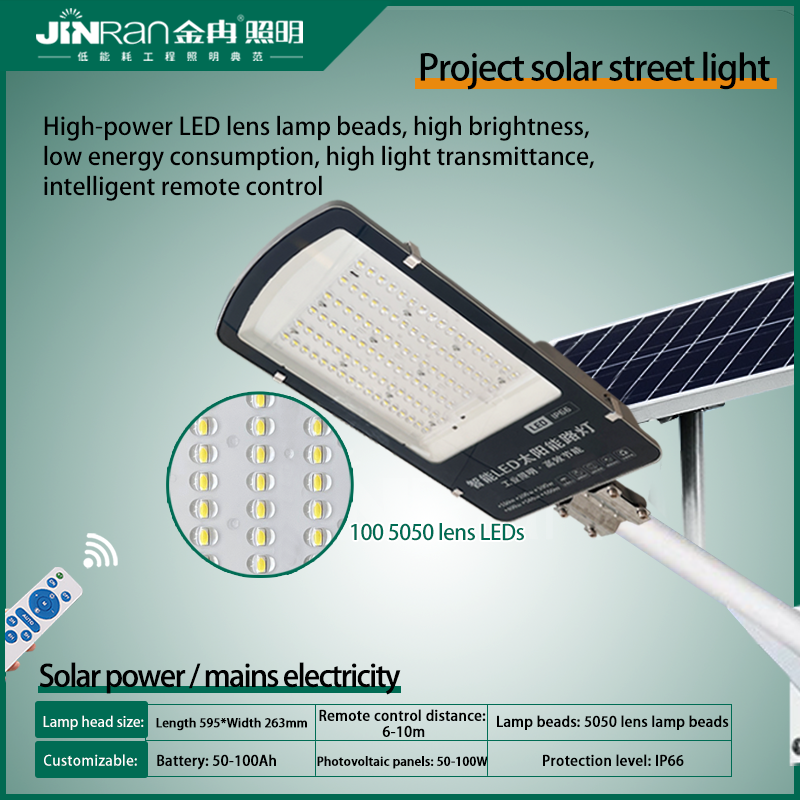
As urbanization increases, the demand for sustainable and efficient street lighting solutions has risen significantly. One of the most promising advancements in this area is the deployment of project solar street lights. These systems harness solar energy to provide illumination, making them an environmentally friendly and cost-effective option for cities and communities worldwide.
Project solar street lights consist of several key components: solar panels, LED lights, batteries, and a control system. The solar panels capture sunlight during the day and convert it into electricity, which is stored in batteries for use at night. LED lights are favored in these systems due to their energy efficiency and long lifespan. The control system ensures optimal performance by regulating the light's brightness based on ambient light levels and battery status, thus enhancing energy conservation.
One of the primary advantages of project solar street lights is their independence from the electrical grid. This feature is particularly advantageous for remote areas where infrastructure development is limited. By utilizing renewable energy, project solar street lights reduce reliance on fossil fuels, decreasing carbon footprints and contributing to a cleaner environment.
Another significant benefit is the reduced installation and maintenance costs. Since project solar street lights do not require extensive wiring or connections to the electrical grid, installation is simpler and faster. This can lead to lower labor costs and reduced disruption for local communities. Furthermore, many systems are designed to be low-maintenance, with LED lights lasting up to 50,000 hours, meaning fewer replacements and minimal upkeep.
Moreover, project solar street lights enhance public safety and security. Well-lit streets deter crime and increase the feeling of safety for residents and pedestrians alike. Additionally, these lights can be equipped with smart technology, enabling features such as motion sensors and remote monitoring, which can further improve safety and energy efficiency.
When planning to implement project solar street lights, communities should consider various factors, including the geographic location, local sunlight availability, and community needs. A thorough assessment of these variables will help determine the ideal system specifications, such as the number of lights, battery capacity, and solar panel size.
In conclusion, project solar street lights represent a forward-thinking solution to modern lighting challenges. By leveraging renewable energy and innovative technology, these systems provide an effective means of illumination that benefits both the environment and the community. As cities and towns continue to explore sustainable options for infrastructure development, project solar street lights will undoubtedly play a pivotal role in shaping the future of urban landscapes.
Project solar street lights consist of several key components: solar panels, LED lights, batteries, and a control system. The solar panels capture sunlight during the day and convert it into electricity, which is stored in batteries for use at night. LED lights are favored in these systems due to their energy efficiency and long lifespan. The control system ensures optimal performance by regulating the light's brightness based on ambient light levels and battery status, thus enhancing energy conservation.
One of the primary advantages of project solar street lights is their independence from the electrical grid. This feature is particularly advantageous for remote areas where infrastructure development is limited. By utilizing renewable energy, project solar street lights reduce reliance on fossil fuels, decreasing carbon footprints and contributing to a cleaner environment.
Another significant benefit is the reduced installation and maintenance costs. Since project solar street lights do not require extensive wiring or connections to the electrical grid, installation is simpler and faster. This can lead to lower labor costs and reduced disruption for local communities. Furthermore, many systems are designed to be low-maintenance, with LED lights lasting up to 50,000 hours, meaning fewer replacements and minimal upkeep.
Moreover, project solar street lights enhance public safety and security. Well-lit streets deter crime and increase the feeling of safety for residents and pedestrians alike. Additionally, these lights can be equipped with smart technology, enabling features such as motion sensors and remote monitoring, which can further improve safety and energy efficiency.
When planning to implement project solar street lights, communities should consider various factors, including the geographic location, local sunlight availability, and community needs. A thorough assessment of these variables will help determine the ideal system specifications, such as the number of lights, battery capacity, and solar panel size.
In conclusion, project solar street lights represent a forward-thinking solution to modern lighting challenges. By leveraging renewable energy and innovative technology, these systems provide an effective means of illumination that benefits both the environment and the community. As cities and towns continue to explore sustainable options for infrastructure development, project solar street lights will undoubtedly play a pivotal role in shaping the future of urban landscapes.


Contact Jinran
Phone:+86-13793941613
E-Mail:jinranzhaoming@gmail.com
Address:Linyi Hardware City, Jiuqu Street, Hedong District, Linyi City, Shandong Province
Get a Quote